"You should think of your lawn as an area rug rather than wall to wall carpeting": Advice from a pollinator garden expert
Listen to the Full Interview
McMackin (TED talk): "We have lost nearly half of insects on planet Earth just since I was a little kid." Sources: Krefeld study, PLOS ONE 2017 (72% decline, 1989–2016); PNAS, 2025 (pollinator risk); Science, 2019 (bird decline)
Why Is This Happening?
The three forces driving the collapse
90% of pollen samples from bee hives contain multiple pesticides. Neonicotinoids impair foraging, learning, immunity, and reproduction.
Development replaces native landscapes. American lawns — the largest irrigated crop in the U.S. — are ecological deserts for pollinators.
Rising summer temperatures are the closest correlate to the 72% insect decline. Bloom timing shifts break pollinator-plant relationships.
Sources: Nature Sustainability, 2024 (pesticide impact on bees); World Wildlife Fund; ScienceDaily, 2025 (temperature link)
If you've ever visited New York City, you may be familiar with the Brooklyn Bridge Park. The park consists of two giant gardens located in the middle of one of the largest metropolitan areas on the planet. Rebecca McMackin, a self-described ecologically obsessed horticulturist and garden designer, designed the park on top of two shipping piers. Her TED talk, "Let Your Garden Grow Wild," encourages gardeners to reframe the way they think about their yards.
McMackin emphasizes that changing behavior works better through inclusion than criticism. She describes observing someone in Cambridge, Massachusetts meticulously hand-picking each leaf off a perfect manicured lawn — and recognizing that as an expression of care, not negligence.
"Shifting that energy over into a more beneficial way slowly and gently, so that you're going with that inclination to care, rather than saying, 'No, you're doing it wrong. Change direction.' If you're looking at the long game, you're looking at really changing behavior rather than trying to score points." — Rebecca McMackin
Lawn management as a practice originated in England. After Versailles, massive estates started displaying turf as a symbol of wealth — land that didn't need to produce food or house animals. "It's literally just green for no reason at all," McMackin explains, "but there's an incredible amount of labor that goes into it. It's just a display of wealth."
In the late 1800s, settlers and early colonial people in North America started managing land this way, mimicking European trends. Then after World War II, an abundance of chemicals developed for the war — herbicides and pesticides derived from copper and zinc experiments by weapons manufacturers — made their way into the turf care industry.
"American turf is very different from European turf. It is the largest irrigated crop in the United States. It's absolutely massive. It's tied into consumerism. It's tied into masculinity. It's tied into capitalism. All of those things are very much part of our American identity." — Rebecca McMackin
McMackin's Four Rules for Supporting Pollinators
What to Stop Buying at the Store
McMackin: "I'm always amazed that it's even legal for homeowners to just go into a store and buy really, really toxic things." Here's what she means.
For food plants or turf that truly needs fertilizer, organic options work. She proved it on 85 acres of Brooklyn Bridge Park — "absolutely hammered by millions of visitors" — managed entirely organically.
Sources: NRDC (neonicotinoid effects); Environment America (product identification); Friends of the Earth (Roundup/glyphosate); IMARC Group (market size); Gitnux (pesticide data)
The Japanese Beetle Paradox
Boulder County has been under a Japanese beetle quarantine since 2018.
McMackin's insight: the chemicals people buy to kill beetles create the habitat beetles breed in.
The Irony
"The places where I see Japanese beetles having the biggest impact is around traditionally managed turf," McMackin says. The grubs need chemically managed lawns to survive — the moist, predator-free soil is their nursery. When you spray to kill them, you also kill the parasitic wasps, nematodes, and birds that would have controlled them naturally. "We're constantly resetting it over and over again. We never allow that balance to be reached."
What McMackin Did
At Brooklyn Bridge Park, she did nothing. The beetles arrived, infested the roses — and she waited. "Over the next year, the beetles disappeared." When the park switched to organic turf management, the beetles lost their habitat. Natural predators moved in. Eggs dried out in soil that wasn't artificially irrigated. One year. Colorado State Extension confirms: letting soil dry in July–August kills eggs and early grubs naturally.
Sources: McMackin interview (approach & quotes); Colorado State University Extension (lifecycle, quarantine, organic control); Colorado Dept. of Agriculture (quarantine & Front Range status); OBEX Pest Defense (2025 Front Range activity)
It's the same principle with aphids. When Brooklyn Bridge Park's catalpa trees got covered in them, people pushed McMackin to spray. She didn't. The following year, two-spotted ladybugs — absent from New York City for 30 years — arrived to eat them.
McMackin's broader point: managed turf is the beetles' nursery. Pesticides are the birds' poison. And the $60 billion lawn care industry profits from both sides of the cycle — selling you the chemicals that create the problem, then selling you more chemicals to treat it.
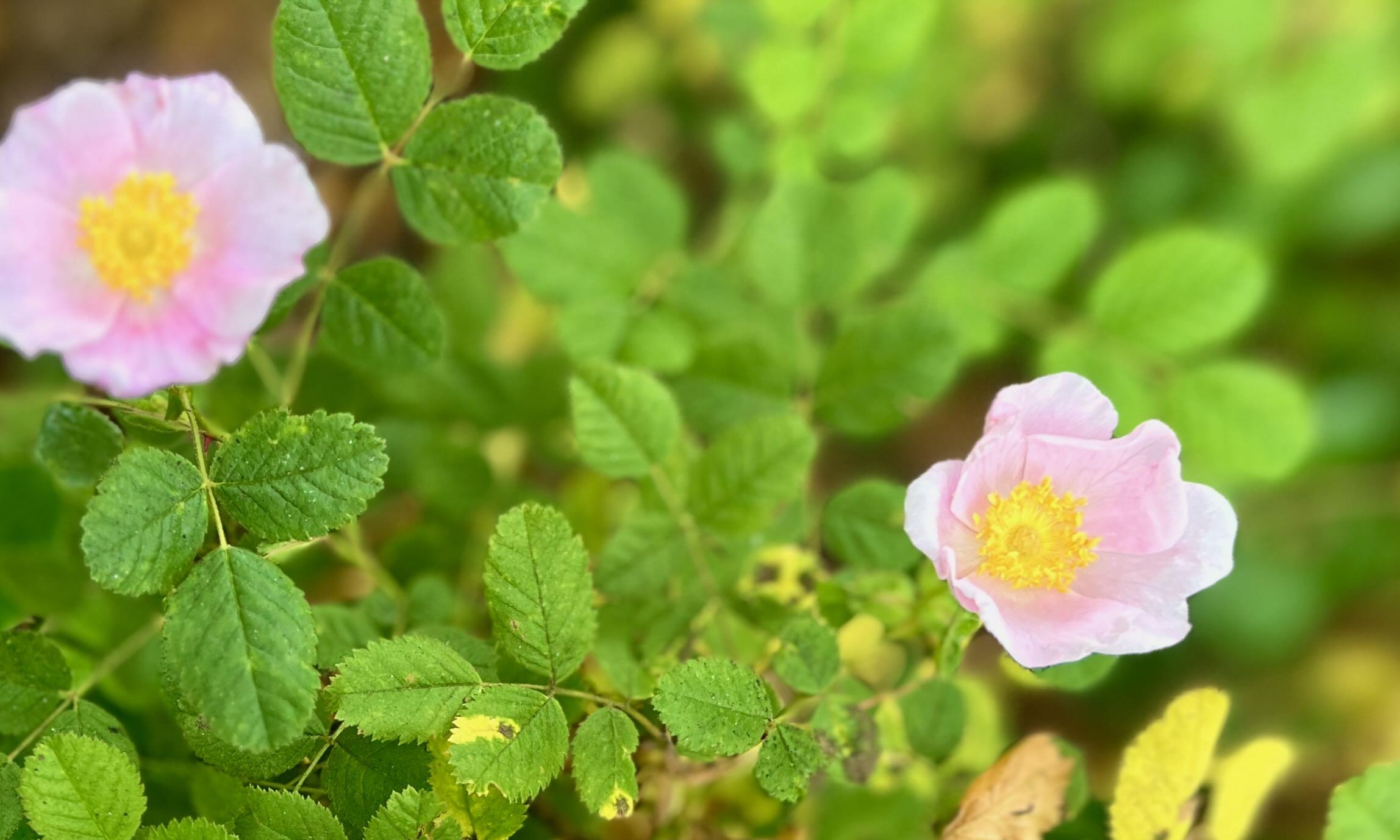
When Brooklyn Bridge Park's catalpa trees got covered in aphids, people encouraged McMackin to spray pesticides. She didn't. The following year, two-spotted ladybugs — absent from New York City for 30 years — arrived to eat them.
"If we keep on wiping out the population of herbivores before any of those parasites or parasitoids or predators can get to them, we never allow that balance to be reached. We're constantly resetting it over and over and over again." — Rebecca McMackin
McMackin references ecologist Doug Tallamy's "10-step program for dealing with plant pests": Take 10 steps backwards from your plant. If you can still see the pest, then you can deal with it. "But it solves most problems by just walking a little bit farther away."
The Chain Reaction in Your Yard
McMackin: "Landscape contractors remove the leaves, compost them, and sell them back to you as mulch. It is simply a way to make money."
What We Do Now
Trees place them on root systems to decompose
Emitting 23x the CO of a pickup truck in the process
"It is simply a way to make money" — McMackin
They needed that leaf layer to complete their life cycle
Most feed babies exclusively on caterpillars from moths
3 billion fewer birds since 1970
What Nature Needs
Trees place them on root systems to decompose
Nutrients return to soil, carbon gets sequestered
95% of species need this to complete their life cycle
Just 5% of native plants produce 75% of caterpillars
Chickadees need 6,000–9,000 caterpillars per clutch
Pollinators, birds, soil, trees — all connected
Sources: McMackin interview (leaf/mulch cycle); Doug Tallamy/Coastal Georgia Botanical Gardens (5%/75% keystone plants, caterpillar counts); Audubon (native plants & birds)
Sources: Edmunds, 2011; Environment America
McMackin explains that when deciduous trees lose their leaves, they're not throwing them away — "they're carefully placing those leaves on their root systems where they will break down and turn into soil, and all of those nutrients then become available for the plant once again." It's a carbon cycle: down into the ground, into the tree, into the leaves, and back around.
Interrupting this cycle doesn't just harm the plants — it disrupts 95% of moth species whose caterpillars complete their life cycle in the leaf layer. Those caterpillars feed the birds. "The majority of birds feed their babies a majority of caterpillars," she says. "And most of those moth caterpillars spend part of their life cycle in that leaf layer."
McMackin addresses the "Kill Your Lawn" movement directly: "It's kind of punk rock, kind of in your face and catchy. And I like it. But I'm not of that ilk." As a public park designer, she sees lawns as functional habitat for humans — spaces that signal belonging. The problem isn't lawns themselves. The problem is using lawn as the default for every inch of landscape you don't know what to do with.
"Go outside and look at your landscape and think, 'Okay, this is how I use this landscape. I want to play catch with my kid. I want to have a barbecue.' There's a defined footprint for those activities. And then the rest of your landscape can either be wild, forested, gardened — there are so many ways to manage those landscapes that are not turf."
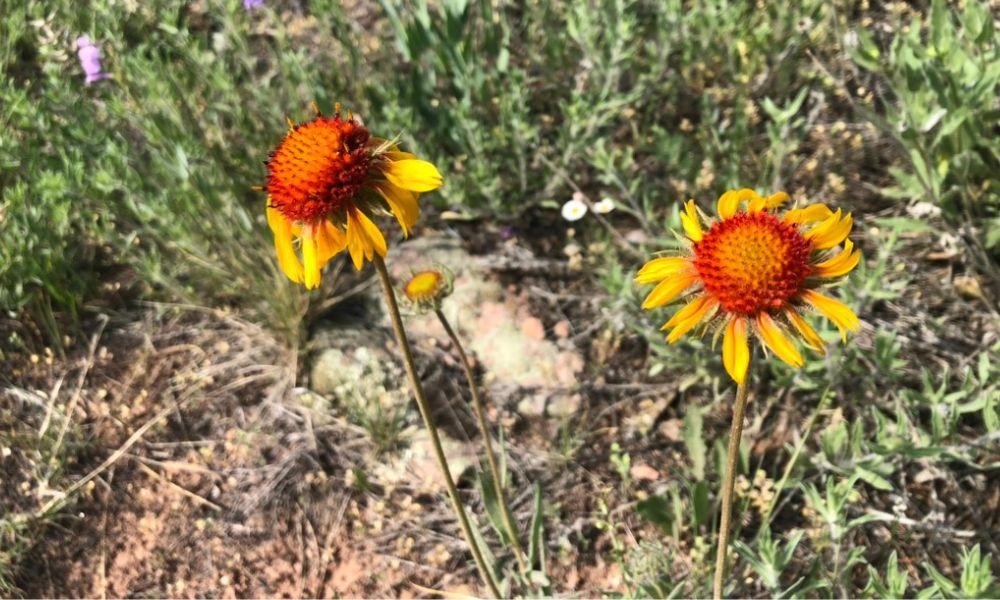
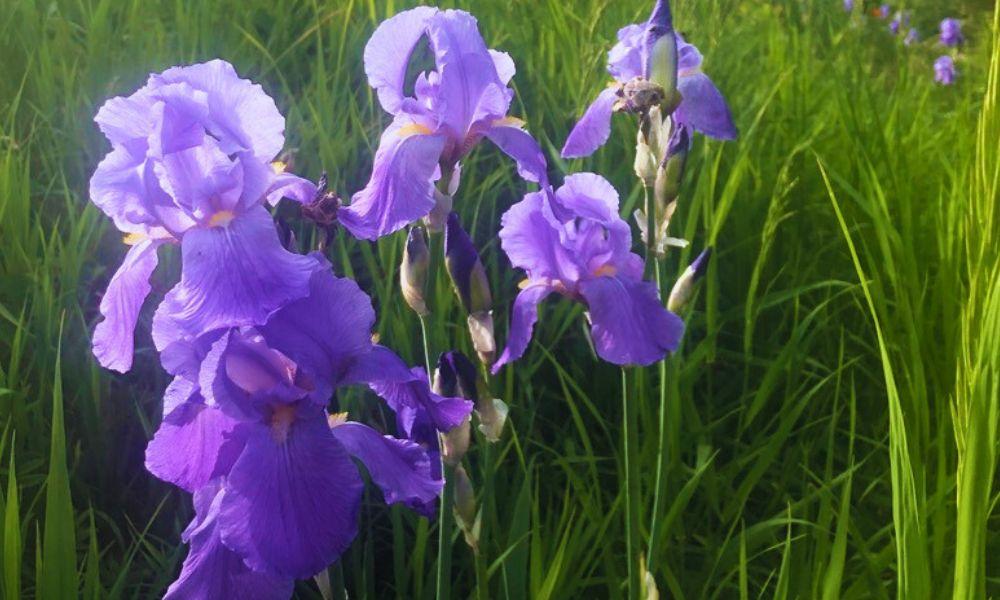
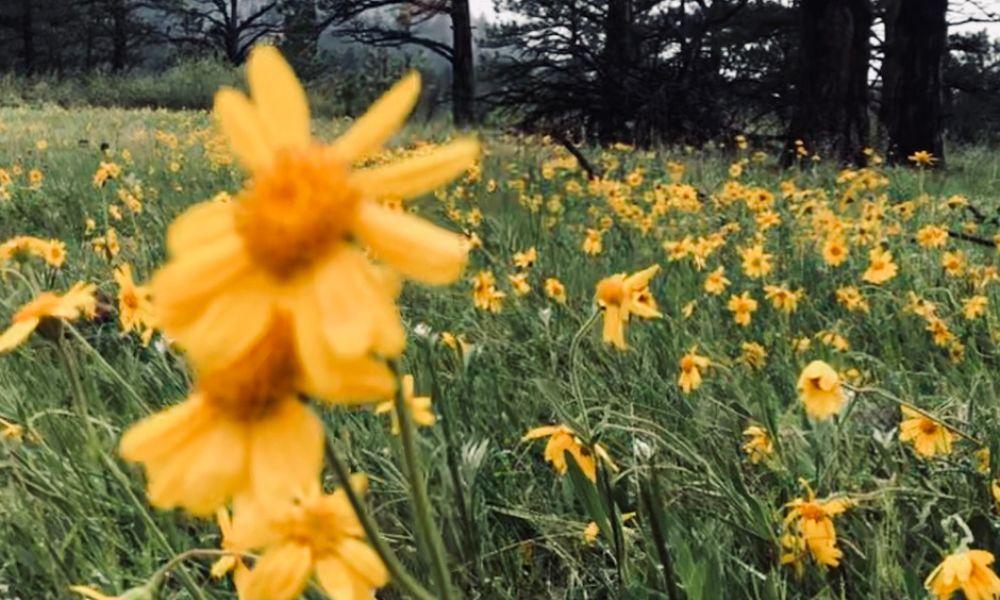
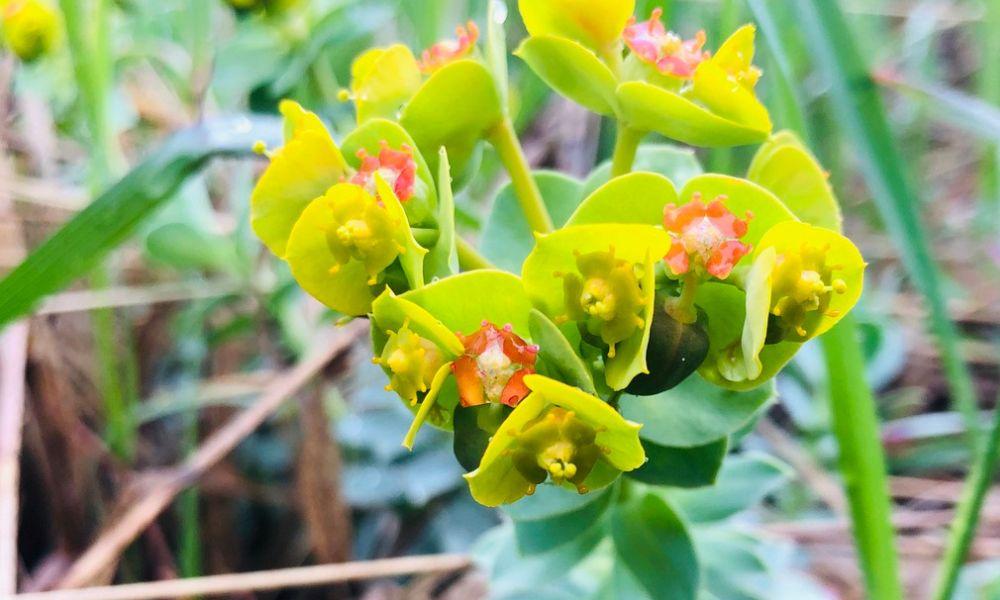
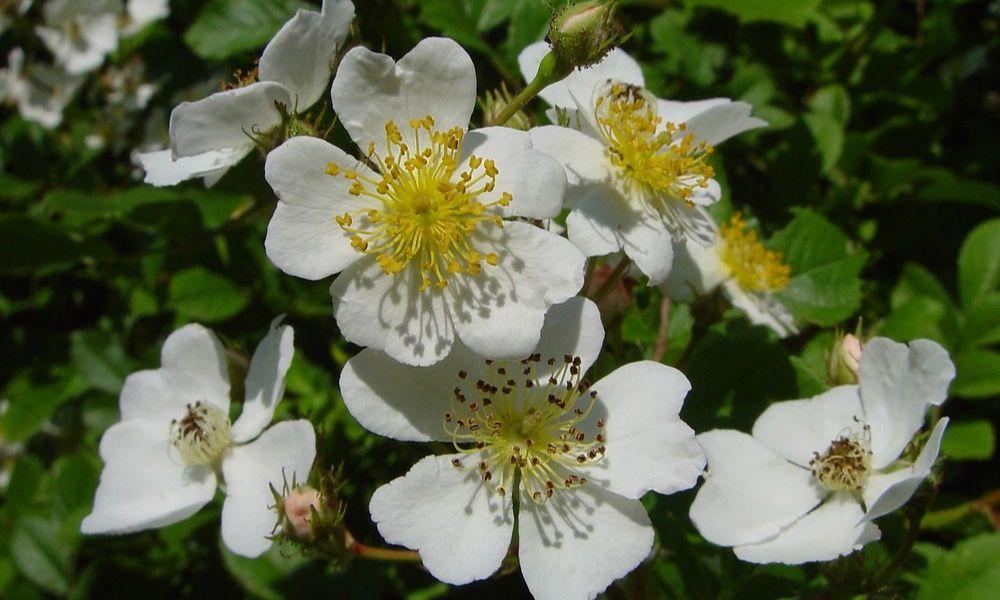
Colorado Native Plants McMackin Recommends
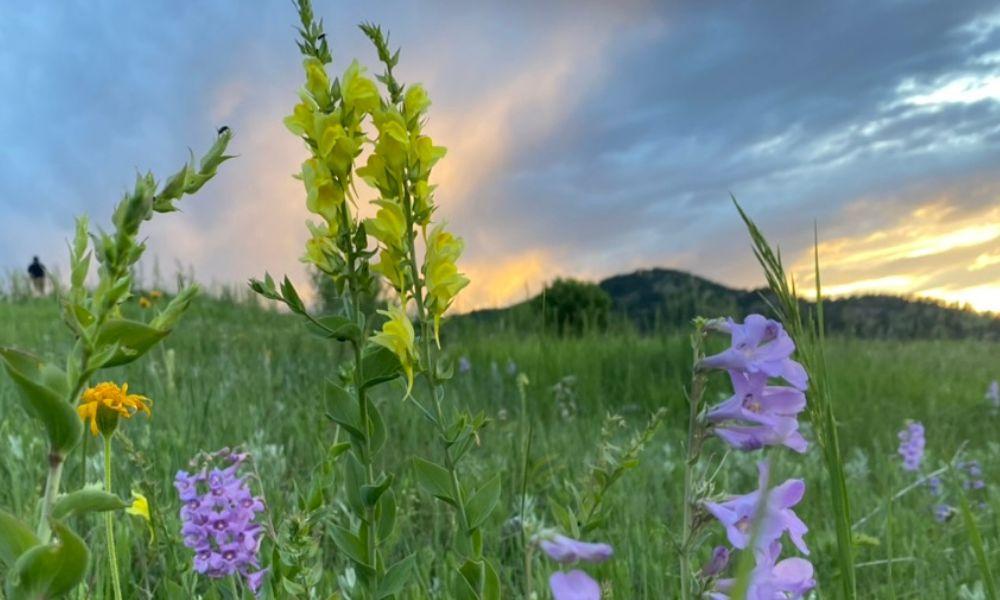
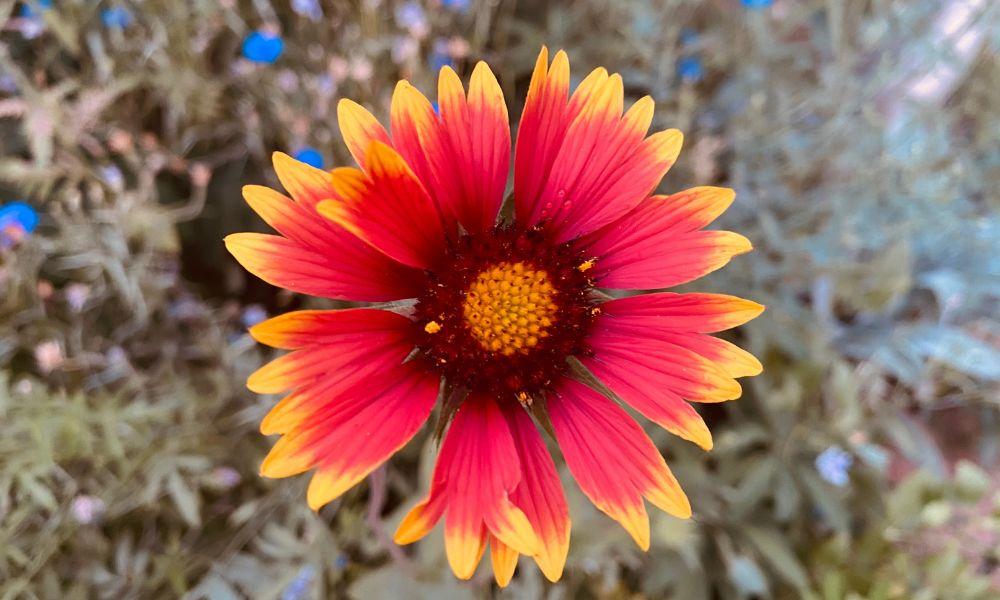
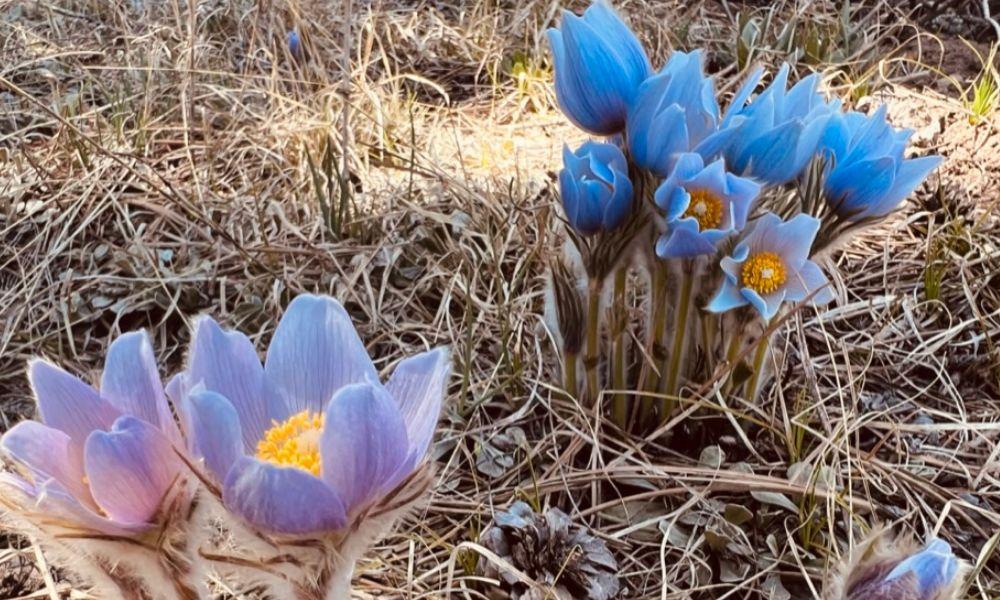
McMackin's top picks for containers: milkweed and asters. "There's got to be at least five asters where you live that are native." Plus pearly everlasting — "the most attractive host plant I've ever seen in my life." Photos: Alexis Kenyon/KGNU
"When people go to Brooklyn Bridge Park, they're usually there to play basketball or have a picnic. They have no idea that they're walking through a monarch habitat or a firefly sanctuary. It just reads as a beautiful park with lots of butterflies and magical evenings. And if we can do that in the middle of New York City, amidst all that traffic and concrete, you can do it anywhere." — Rebecca McMackin, TED talk
Since This Story Was Published: What's Changed
A 2025 study in PNAS found that more than 22% of native pollinators in North America are at elevated risk of extinction — including 34.7% of native bee species. Between summer 2024 and spring 2025, 1.7 million bee colonies died, a loss of more than 60% of U.S. commercial beekeeping colonies.
In Colorado, the 2026 legislative session includes HB26-1132, a Native Plant Bill aimed at expanding state access to and use of native plants. The City of Boulder now maintains official pollinator gardens and pathways, and CDOT has begun reseeding highway interchanges with pollinator-friendly native plant mixes.
Rebecca McMackin was awarded the 2023 Pollinator Advocacy Award from Pollinator Partnership and the 2024 Francis Peters Award from the City Garden Club for her work at Brooklyn Bridge Park.
"In these scary times, it can be so hard to know what to do and how to help, but it feels great to cultivate life with your own two hands. We all deserve to live in a healthy and thriving ecosystem. But it feels even better when we're part of those systems, supporting the plants and pollinators around us the way that they support us." — Rebecca McMackin, TED talk
This story was originally published July 22, 2024 on KGNU Community Radio. Rebecca McMackin's TED talk, "Let Your Garden Grow Wild," is available on TED.com.